As the Wheel Turns: Summer Solstice Contemplations
As I sit here in the studio under oppressive heat broken occasionally only by a slight warm breeze rustling the curtains, it reminds me that it is, once again, that time. The Blue Moon of recent days has opened something I hope will remain open through Solar Winter[1] – or what you in your realm may well call Summer.
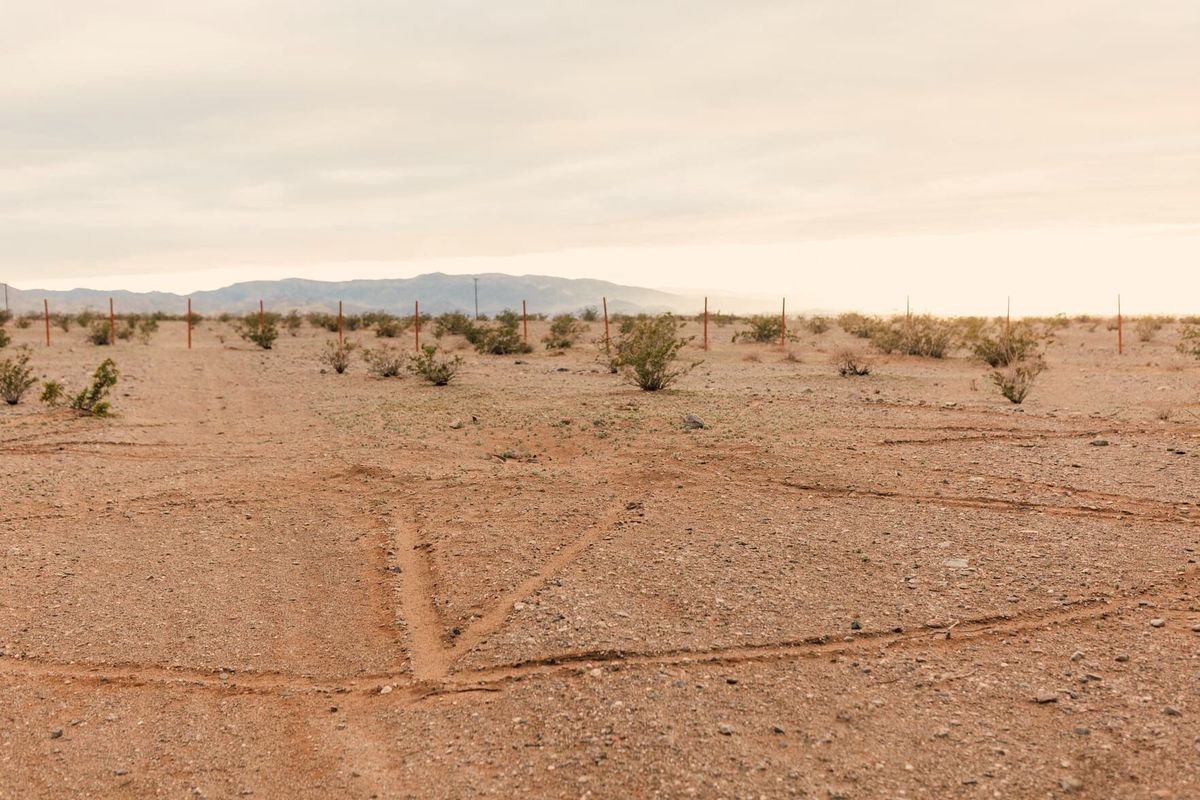
Of course, you've sat with me through similar contemplations before, and so perhaps you already understand that when the Sun reaches its xenith here, in my ecosystem, we are hibernating as you are likely exalting its height and warmth. For warmth for us is not scarce, we are blessed with it for much of the year, and its excess is the most dangerous thing about this place, and so for the next few months most living things here will be remaining underground save for the time when the Earth is lit by starlight only, or when the rains come to grant us a moment of reprieve.
Though it is not untrue that here in this land the Sun brings life as elsewhere, and yet it is also true that the Sun here brings Death, perhaps where in other lands it is primarily its absence that withers what grows. And so, even whilst we sweat and thirst in the heat, we must pay homage to the Sun on his most exalted of days, the day in which he reigns longest.
The Paradox of Fertility
Something has been gnawing at my mind recently, and I wrote about it a touch in On Death, but it is that realization that truthfully nothing can become fertile without decay. In our landscape, the great cycle of decay is interrupted: I recall moving into this place and finding bones out back that appeared to belong to a coyote, to find them made so brittle by the sun they turned to dust when I picked them up. In a wetter climate, one can assume the molds and animals will break down manure or the bodies of the dead, that even outside of a typical compost heap things will properly decay given time. Here, the nutrient cycle is broken and all dessicates in the Sun that is not eaten.
In this way the Sun is perhaps our greatest enemy, and in the manner of moving things we must hide our detritus in the ground from Him[2], in order that it might have some chance of breaking down so that the very same Sun may make things grow from it.
Such is the paradox of fertility, particularly in our arid landbase: not only is there the paradox of the potential for life relying on decay, but the paradox of the intrinsic nature of the Sun, also. What is Its nature, after all?
Devotees of the Sun
As we seek to exalt the Sun, we must, perhaps, consider what it is we are truly venerating or devoting ourselves to. Is it the hot, potent, projective "masculine"? Perhaps that is an aspect of it. Is it the warmth that eeks out of Winter, stoking grass seed and tree roots like a gentle mother stokes a fire, fertilizing the Earth with its warmth and rays (there is a greater reason that the Sun is seen as the "masculine" aspect of the primary celestial bodies, after all), in this way containing in itself both maternal and paternal aspect – and things in between? Is it the maker of war and drought, the light-wrought-darkness, the usurper, the pyromaniac trickster who leads us to certain death?
Perhaps it is all of these things, and none at once. Seasonally we orient to our veneration of Him differently: in Winter we pray, perhaps, for Its return. In Summer perhaps we pray for Its benevolence, for It to will collaboration with the Winds and Clouds and Rains.
We are all a microscopic dust mote tickling the great spiderweb of life, and the Sun is an aspect of its tension. And so, this season, the Sun is less-than-benign, an almost omnipresent force out of balance, containing of a monarchic and oppressive quality. Therefore, we venerate it with a kind of hesitation, a deep respect like that which we offer the venomous snakes and insects that live amongst us: and thus our Solstice rites will continue to include water, because water is the great counter: the rain is the only thing that reduces the intensity of the Sun's effect during this season.
And so as we step into June once again, and the continuation of the Sun's rising to its Northernmost point, and its maddening reign over our lives, we venerate the Sun as being such potent force, but also the Moon and the Water especially as relieving and balancing forces. For by starlight we are once again capable of motion, of dance, where by the Sun this season we are held quiet and still for our own sakes.
Thank you for reading this much shorter offering this month. There are quite a few things in the works, both for the Ranch and for my Practice, and it is important to me to begin to dedicate a little more time to the visual aspects of my Practice as my wrist heals and I am capable of doing so. It is quite possible that in the very near future I will be opening up a segment of my Practice to the public again, which will hopefully allow me to access mentorship opportunities and employment opportunities that would be extremely beneficial to our stewardship endeavors.
With that being said, I would very much appreciate your support! If you appreciate what I'm writing or doing, please consider donating to my ko-fi or sharing my website with a friend.
Next month is going to be extraordinarily busy but I hope to return to a more explanatory writing style for a time and offer musings on Gods as Representations of Forces, including a dive into what it is to be a devotee of a given pantheon (including an eclectic one) and some ways to do this well and perhaps less well or less effectively. After that, I will either release a piece on fertility magick or return to the Entheogens series to discuss Kanna.
Until next time ~
Notes
- I hope our local friend who in turn was given this phrase by another friend does not mind my use of it here!
- While I am using the masculine pronoun to refer to the Sun in this post, there is quite a bit about gender essentialism or the concept of polarity in general in Western Occultism that is gravely misunderstood by both those who swear by its truth and those who critique it, but this feels like a lot to unpack for what is meant to be a fairly short article so for now allow some flexibility if you will and allow me to tackle this in the future in more depth. Ultimately, my usage here is a poetic choice and it evokes what it is meant to, or so I hope.