On Practice
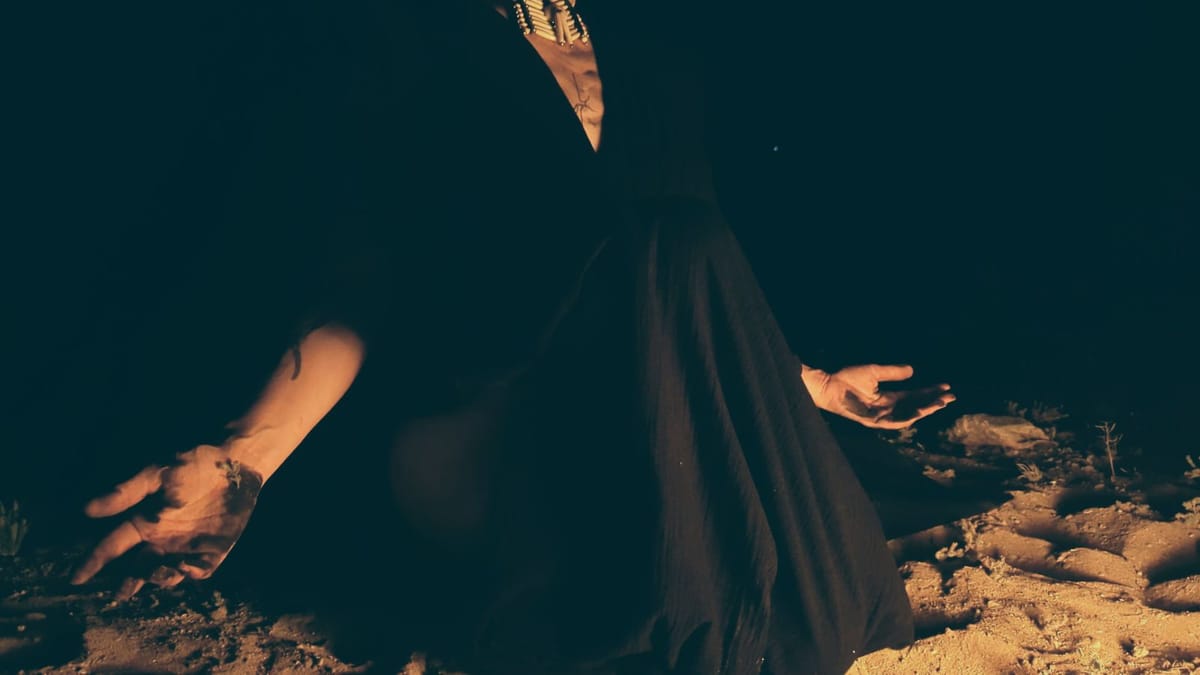
It seems almost backwards that I haven't gone into more detail yet about what it is I actually mean when I say Practice in all of these musings, and yet to sit and write this feels so strange as well. Attempting to describe a spiritual practice with those with whom I share no context is very fraught, I'm sure, with the potential for misunderstandings, projections, assumptions, and the like. At the same time, it's almost impossible to really initiate anyone into context for, say, tattoo rite or collaborative art without explicitly communicating what principles I am operating off of first.
And so I will try, at least, to go into detail. I embrace and accept your projections, misunderstandings, and questions: I'm sure they will teach us both something.
Belief: What Principles?
Underlying any spiritual practice, whether acknowledged or not, are fundamental beliefs or assumptions about the world or universe. Whether you are a strict, pragmatic atheist, or a pagan reconstructionist, or a Christian, or a self-proclaimed witch, you are making certain assumptions and operating based on specific beliefs. These beliefs may be things like:
- There is a God which has created the universe I occupy, and who has created in turn specific universal morals I need to abide by
- Science is always correct and unlimited in terms of what it can know, and my beliefs about how the world operate are based on its methods and execution in the modern age
- Ancient spiritual systems were more connected to the natural world and therefore more knowledgeable than modern religions, therefore my worldview is based on reconstructing what I can of theirs in order to more closely approximate knowledge
I, also, operate based off of my own set of beliefs and assumptions. It feels important to mention, though, that this is not random, and perhaps not even chosen. I would not be honest if I were to sit here and pretend that I've not subconsciously brought anything over from my upbringing, which was Catholic, nor that I am immune to social forces or the simple fact that perhaps culture shapes which ideas I'm capable of having, or which knowledge I'm capable of accessing.
However, with that disclaimer, that I am not purporting to somehow be specially exempt from the forces that influence the spiritual practices of most other people in the world, it is true that I have come to my beliefs in a slightly different way than, I think, most people do – at least most people without a very decisive cultural inculcation into a specific spiritual practice.
In order to explain, I must share something that is difficult to share with, well, anyone likely to be reading this on the internet. Again, I welcome your misunderstandings and projections, but for this in particular I ask that you at least attempt to withdraw your tendency to pathologize.
Since I was a child, I've experienced the world differently than most people seem to. Because I cannot literally experience others' perceptions in an unfiltered way, I say this based on the conversations I've had with other people, my experience of their behavior and reactions to things, the way experience is described in books and other media, and so on. In other words: I've been in the world, I've engaged with humans, and based on this experience it feels as though the way that I move through the world is somewhat shifted. For instance, most people describe their experience of time as being linear. Even when there is an awareness (either because of an interest in physics or mysticism, or psychedelics, or all of these things) that time is not really linear, in general conscious experience tends to be: I remember yesterday, when I did this thing, and now in this moment I'm doing this other thing, and tomorrow I will do yet another thing. My experience is a little more like "many things are occurring simultaneously, though the input I receive from the things around me enable me to tune out most of the things occurring and engage with the physical world in a fairly straightforward way". Occasionally, though, when I'm not actively tuning out additional input, something that hasn't "yet" happened (in a chronological sense) will occur briefly, and I'll get forgetful or confused for a moment. Navigating this way for a while has made me pretty adept at remaining aligned with reality, and so the moments where I appear forgetful or confused (except for those where I'm distracted, generally, by typical things) are very rare.
This manifests in a few ways in my daily life. Sometimes I know things are going to happen (or not going to happen), though I really cringe at the self-identification of almost anyone as a "psychic", maybe because popular culture and real grifters have really ruined it for me and made me feel embarrassed to share my own experience lest others think I'm also a grifter, a liar, or crazy[1]. It's not foolproof. I get distracted, because ultimately engaging with physical existence in the way that other people do is consuming of energy and focus and because I'm not exempt from projecting my own desires, fears, or preferences onto my experiences just like everyone else. It would be nice to be able to say that I've honed my experience in a way where I can apply it and do something useful, but most of the time I don't (though sometimes I do) and sometimes I'm wrong when I try. Eventually, when my life is a little less busy, I hope to get a little better at this, and this is something I'm striving towards. Ultimately, whether I'm experiencing events that are "past", "future" or "present" (or usually some combination all at once), just like everyone's perception, this is a way of knowing.
Additionally, my brain seems to have a very hard time distinguishing what is happening to me and what is happening to someone else in front of me. This has actually led to false memories that I've had to untangle, as I've witnessed certain things that were severe enough to lead me to both selectively forget the event but remember the other person's pain, and then somehow find my brain re-constituting the memory as though I was the person being harmed. One benign example of this that I feel willing to share is an instance where as a child my father took me to a campsite near a lake – I don't remember if we were camping or just hiking/hanging out at the lake – we walked by someone who had gotten a fish hook stuck in her leg. I think. To this day I have a very hard time knowing if my memory is accurate: if I witnessed this happen to someone else or if, when walking behind someone casting their line, I actually got a hook stuck in my leg. This is confusing, and sometimes annoying (I cannot watch lots of movies, and especially when I was younger if someone would show me a movie with a graphic scene in it, I'd have a very hard time separating my memory of the movie from real-life experience), and luckily it goes both ways (there is sometimes a similar false experience when watching someone experience something exciting, pleasurable, or otherwise positive) but an incredibly useful tool that I've gotten much better at managing. This allows me to listen acutely: to understand the motivations, feelings, and considerations (read: not thoughts) of the beings around me, as I am able to actively participate in their existence as a kind of mirror. So long as I do not get swept up in fantasy, desire, or mired in someone else's misery (which is sometimes difficult to avoid), I generally have a deep awareness of the needs of the beings around me, both human and otherwise.
I don't think I'm entirely unique in either of these modes of experience: I think some people who call themselves psychics (and possibly some mediums as well) quite possibly experience time in a very similar way to myself, and just know how to tap into that experience in a more controlled way. I think there are people who are varying levels of disabled by other people's pain, though I also really hate the term "empath" and think that most people who apply it to themselves are not having this experience (based on the behavior and reactions of people I've known who call themselves empaths but then seem to actually lack a lot of basic human empathy, let alone the kind of intense perspective-taking experience I'm describing).
I share these experiences, though, to illuminate a way of coming to the system I've come to. There are principles I hold which I hold because of knowledge I have. I have not necessarily come to that knowledge through the inculcation of culture, nor (sometimes) through mentorship or direct "learning", but I do have knowledge. Other principles, then, I do hold because I've been granted them through mentorship, research, or group membership.
First: Animism
One of the most primary of the principles which underlies my Practice is that of animism. All things contain being. I say being and not life or spirit because these words don't all mean the same thing. A rock is a being: it is experiencing something. It is a part of a cosmic, throbbing, living whole, and therefore it is a moving, decaying, metallic and mineralic piece of that whole. Part of the wholesale rejection of animism comes, I think, from Western minds being unable to comprehend that there is no distinction between the life of a rock and the life of a human or animal, and so I say being instead of life to be more clear to my (mostly) Western readership. Partially this is a failure of ours to be capable of not dissecting concepts down into their parts, but also I understand it if you've been socialized to believe that life implies locomotion and agency. A rock is alive: it is part of a cycle, it decays, at some point it was created from natural processes, it grows, it moves, though not of its own volition. It does, probably, have some form of atomic consciousness, though that's maybe a topic for another time. It does not necessarily have agency, as it's not capable of projecting its will in an intentional way, but it is a being. This goes for everything on earth, though I have a harder time sensing aliveness from the plastic objects we've produced from the chemical by-products of decayed plants and animals (fossil fuels). I think that in part comes from their distance from processes of decay. They were created by living beings, from, ultimately, a by-product of living beings, and thus I'm certain there is an experience there as well, though it feels muted in part because the shedding of microplastics is not exactly the same as decay. Anyway.
Animism is central because the way that we behave when we consider the intrinsic being-ness of everything around us is different than when we fall prey to the subject-object fallacy of the English language and post-colonial societies in general.
Nothing is an individual
This comes, in part, from animism. Recall that I stated that one of the things that makes something being is that it is a critical part of a living whole -- and as such is just as real and alive as, say, your liver is. That it cannot function on its own is a silly distinction to even make: no single human can fully function on its own, either--and I don't just mean without other humans. You die without plants, animals, minerals, the dancing gases in the air. You are not an individual, you are an organ, also. We are deeply interdependent with everything around us: to continue to pretend we are completely discrete beings who can then be broken down into completely discrete requisite parts is a terrible misunderstanding. We began to take things apart to understand them and we forgot that they were whole once, that once we understood them as they were: integrated and reliant on everything else, that you can't truly isolate any one part of the system and claim to understand the system.
Nothing is an individual: not you, not I. Our experience lies to us through our language, our culture, because once humans experienced being with rather than being in as an intrinsic part of reality.
Discretion is simply the misunderstanding of an illusion that enables tension and physiological system maintenance, it is not real.
As part of a whole, we exist for a purpose
I do not believe in the existence of a super-existential entity called "God" though what we call "gods" are representations of forces that exist, at least insofar as "exist" means "create knowable effects and can be inferred through Practice" because ultimately forces are not beings and do not exist in the way beings exist because our definition of existence to some degree presupposes some kind of physicality and interaction with the whole that is created by the forces.
Kabbalism has good language to describe this, and I think for most of us socialized in global Western, post-Christianized societies it's a good point of meditation and learning to start with[2], though my Practice exists outside of some of the theological implications of most applied Kabbalism.
With that being said, if we are to assume that we are a part of a functional system, it follows that we exist to fulfill some purpose.
This is tricky: one conceptual thread would follow then that most of us are fulfilling our purpose whether we know it or not, the way our liver may not go through a process of "self-discovery", but it functions just the same. A slightly different conceptual thread, which experiences as a human some sense of free will (which may or may not be illusory some or all of the time), would follow contrarily that some of our life as a human incarnate should be spent actively seeking out and then participating in the fulfillment of that purpose. Perhaps both can be true! It is not impossible that some of our conscious drive to discover our purpose is related to that purpose being fulfilled, to needing to "learn things along the way" in order to better fulfill that purpose. It is also possible that the sense that we are not inherently fulfilling our role is a relatively modern anxiety and that it stems from once being a part of a small group where purpose and function both within the kinship group and cosmically were prescribed by shared spiritual practice, divination at and before birth, astrological awareness and so on, and that now we live in a fractured, enormous society where our place is much more uncertain in the physical, psychological, and economic sense. Does this make us actually, cosmically less suited to fulfill our role? I'm not certain that anyone can know. It may or may not all be a part of it.
Furthermore, to what end? If we are a part of a system, fulfilling a role, what is the ultimate goal of creation? Lots of answers, some theological in nature (i.e: God created us because of love(?)) some not (inherently the act of incarnation is a kind of balancing of the scales of cosmic or divine forces, wherein every being is working out their karma until they're innately ready to reconcile with the Divine) have been proposed by various spiritual systems throughout human history. I don't have an answer to this. I understand that as someone reading this, that may not feel compelling, but this is where I am. Based on experience, some kind of innate creation of tension or balance feels more apt than the metaphor of a God who loves us, but aren't we all saying the same thing then? If the Catholics and Christians propose that God created out of love, in the same way that a parent chooses to conceive and care for a child, and some Eastern traditions propose that creation is inherently in a balance and constantly striving to maintain that balance, is there really any exclusivity between these notions? Is one not a great metaphor for the other? The Western occult tradition holds that polarity (read: not dichotomy or necessarily divisions of binary) is an inherent part of our reality as a microcosm of the polarity of the greater creation, and that in turn as a microcosm of the forces that make creation possible. Outside of the forces that are outside of creation there is nothingness, ain soph. In other words: in order for there to not be nothingness, there must be tension, opposition, things that balance one another. Sodium and water in our cells, flowing in and out to areas of lower concentration, acidic or alkaline soils, trying to maintain themselves to balance. So what is our purpose as human beings? What is the broader purpose of all beings (these are almost certainly nested but not necessarily the exact same question)?
I'll leave that to you to consider.
What is Practice?
These are the most primary principles that inform all of my actions. Though I am not perfect, I am striving to embody the ethical conclusions of these principles. In my daily life, I strive to create rituals and behaviors which honor the broader Will of the Divine, or of the system, as well as which maintain my clarity and awareness lest I need to listen and make changes. Acknowledgement of imperfection and mistakes is central: there is an iterative ascension of being, it takes effort, and it is almost certain that I cannot achieve beyond some somewhat unknown point spiritually while still within this body.
So what does this look like? There are a few concrete values I abide by (or try to), such as:
- I am not an individual. Whilst physiological needs are obviously necessary to meet (except occasionally while abstaining from something for ritual purposes, fasting, for instance) in order to maintain the condition of this body that I need for this part of my existence, desires are not paramount and should be deeply considered. Does what I want harm another being? How does that influence the system as a whole? I consider this when making food choices, for instance. I need to eat, and maintain good nutrition. However, my good nutrition shouldn't come at the expense of other beings where that expense is detrimental to the system as a whole (or where that expense sends the wrong message of concession of ethics to others where I am supposed to be teaching them). I am not primary: I am not more important than any other being on this planet, or within this universe. My comfort should not come at the expense of others, and when it does, I should take steps to remediate the damage that I am causing.
- In a shifting universe that is constantly seeking balance, it is imperative to understand that what I need to be doing sometimes changes. I engage in daily meditation to ensure that I am capable of listening to small signals, and larger ones as they appear, which indicate that a pivot is needed.
- Magick is a tool that should not be used to serve one's own Will (as is commonly misunderstood by Thelemites, witches, and those who study any religious tradition as a road to "self-improvement"), but to serve the will of the Divine (or cosmos, or God, or the universe, or whichever feels more apt to you).
- Magick extends far beyond ritual space: if I am not practicing what I am calling in, who I wish to be, and if I am not doing real work in the real world to accomplish the ends I am incarnated to accomplish, I am only performing for others, not really doing magick.
Most days, I wake up at 3:30 in the morning. I spend reflective time to myself, and then I work: I write, draw, imagine, meditate, study, or do physical household tasks that are best done alone (particularly the meditative things, like cutting fat to render lard or some kinds of cleaning). I plan the morning in advance, and usually plan it based on what is needed, not just for the Ranch but for the collective household, the land, or my ability to process and listen. Some mornings I just sit by the pigs, or walk deep into the desert before sunrise.
The rest of the day I stay as focused as possible. I no longer have social media (I run a single, fairly neglected Mastodon account for the Ranch, but I post once a month usually) so I don't scroll. I attend to my family, I garden, I care for animals, I make art. I meditate. I cook.
My life is centered around the Ranch: stewarding the land, feeding others. My art is as much a part of this as my own desires – they are the same.
This is not difficult, nor do I feel as though I am missing anything. Sometimes I am tired, but that is because I have small children and my life is occasionally demanding in the physical sense, but that is not necessarily related to my spiritual practice. Or, it is, I suppose, because it is all the same. I do not necessarily think that this path is for everyone, but my purpose is ultimately in being a host, a creator, a cultivator. In teaching, in sharing what I've learned with others. To be a host, a gardener, a caretaker of beings requires focus and space. And so this is what I do.
On Magick[3]
I have come to weary of discussing this topic in most spaces. This fact is unfortunate, because I think magick is all around us, an intrinsic part of human incarnation. But like many other things magick has been so co-opted and misunderstood as a topic, as it turns out when many of us say "magick" and try to have a conversation about it, we are rarely talking about the same thing. I suppose this is one of the downsides of the actions of those well-meaning initiates who chose to share the details of their Practices and training with the world, to the chagrin of their mentors who knew better, who knew what the outcome was likely to be.
But magick is an incredibly important part of my Practice, and so I must discuss it here. Though, I will not go into what magick is or how to do it, as there are plenty of resources for this (I recommend other human beings who have some reason for claiming that they know, as opposed to online resources or communities or solely learning from books: lots of things on the market are bullshit, and many people are misguided and doing things that are ineffective at best and dangerous at worst). I am simply here to outline what I mean when I say magick, and how that looks in my life.
Witchcraft
I choose the word "witchcraft" though it isn't exact. I practice a form of ceremonial magick that isn't exactly ceremonial magick because I don't invoke entities – though I do communicate with beings in a less direct way and I do communicate with the land as a whole (as a kind of proxy for the Divine, in some or perhaps most cases – those familiar with Kabbalistic teachings may recognize the idea that when working in Netzach or Hod we're working with the emanations of the higher spheres therein, this is approximately where I am at in my practice though I do not necessarily practice with "ascending the spheres" in mind).
Witchcraft is typically associated with folk magick, and some of what I do is certainly folk-esque: the work I do with death, for example, sometimes related to the harvesting of beings that are cultivated on the Ranch to feed the land and others is both a kind of high sacrifice and a kind of folk ritual wherein bones, feet, feathers, and teeth become highly charged objects for use in talismans and related ritual work. There is a lot of overlap between ceremonial magick and folk magick, and much of the distinction lies in who is doing the work and to some degree their purpose: usually "folk" magick is that which is done for banal or material purposes, i.e: protecting a dwelling or healing someone who is sick, and ceremonial magick is that which is engaging with higher spheres and therefore usually asks or demands something of an entity which is a representation of higher forces. Though I don't necessarily see why both wouldn't be used as needed. The material, sometimes seen as the banal or profane, is often just as important. My dwelling must be protected from both incarnate and disincarnate beings who would take away from the Work being done, for instance, in order for higher work to, well, be done.
Rituals are done when needed, and also with celestial events: we honor the New Moon by taking work off. We honor the Full Moon by holding a special dinner each month (usually inviting many people, though sometimes it's just us, depending on the season and everyone's energy level and schedule) and usually focusing on planning and action during this time. We host ritual for the solstices, the equinoxes, and Dia de Muertos. Some, such as the Summer Solstice, where we are at a culmination of projective, active energy, are social events where we invite many friends and utilize everyone's shared energy to a purpose. Some, like Winter Solstice, are more solitary, quiet events where we take space from one another and outsiders and we reflect and do spiritual and psychological preparation for the past and upcoming seasons.
Periodically I refresh guardian sculptures that are tied to our fence, make wards, or do ritual work to prepare space (sometimes for other ritual work, sometimes for plantings, animal harvesting, or vegetable harvesting).
Magick is also an everyday endeavor: meditating every day is a large part of being capable of effective ritual. Maintaining the condition of my body is as well. Periodically engaging in or abstaining from substances is also important. We do not condone addiction, nor blind consumption, and if we find ourselves falling into patterns we take steps to remedy the situation.
Conclusion
There is so much more I could say, but this is already very long, so I'll leave you with this for now. Practice is vital: this is how I live my life, and how my partner and I connect with the world and our work. If you read this in its entirety, thank you for reading. I'd love to hear your thoughts, questions, or how you relate from your own perspective. As always, if this was useful in any way, please consider sharing with a friend. Next month I plan on revisiting our entheogens series, and potentially releasing some more personal writing as an extra. Until next time ~
Notes
- What is what we call crazy but a qualifier for behavior outside of a norm that is itself prescribed and upheld by institutions? We recently hosted a resident who was constantly, it seemed, trying to make us feel weird--and sometimes actually calling us crazy, in a way where it was being passed off as a kind of joke, but where it felt he was more serious than not--any time we would behave in a way that wasn't perfectly aligned with social expectations (and this from a person who claims to be a radical and political activist -- we police from within more than we realize). I don't hate the word, but I do dislike the way it's used more often than not, and it's association with forced incarceration of those who may well be having spiritual experience or who have different modes of experiencing the world simply because we, as a society, wish to ignore that these experiences are possible if we do not completely understand them or have a neat place in society for the people who experience them.
- I do not subscribe to the very recent notion that studying Kabbalah/Qabalah/Cabbala is cultural appropriation. If you are someone who was raised in a tradition that uses the Old Testament (so if you are Jewish or Christian or Catholic), and even if you have Abrahamic roots but study the Quran instead, because the Quran was also deeply inspired by the Old Testament writings, the Kabbalah is open to you and probably more comprehensible and less appropriative to study than the Eastern traditions that teach a similar kind of iterative meditative practice (this kind of iterative spiritual training is called in the Eastern traditions yoga, and I've seen the meditative Kabbalistic practices called a kind of Western yoga, we're borrowing that word of course). Never before (to my awareness and research) was the Kabbalah something that Jewish people claimed for themselves: most of the texts on its interpretation have been written by Rabbis who are interested in others outside of their faith using it for self-improvement and spiritual reflection. While every person and sub-group of people is welcome to their own opinion, and while I respect that opinion, I am hard pressed to understand the motivations of modern young Jewish people who are attempting to claim that people who were raised on the Old Testament should not have the keys to understand it despite the historicity of shared practice therein.
- Ahhhhh this word, guaranteed to bring a few angry emails my way. Yes, Crowley was a megalomaniac who despised women, Jewish people, probably several other "groups" of people as well, and who probably (and most definitely) caused untold harm during his lifetime. He was also erudite, and playing his own role in the grand scheme of things (with intention, not abandon), and if you're reading this you are probably influenced by his writings and actions even if you've never read them and know nothing about them. I use "magick" instead of "magic" despite this, because it's a word and not a donation to Crowley's estate nor a proclamation of love for the guy. Because it does its job of separating what I'm talking about from both stage magic (mentalism and slight of hand tricks) and the New Age notions of "The Secret" or other fantastical nonsense about how magick just happens if you're a chill guy. Magick, as opposed to "magic", for us, is that which is done, that which is practiced, and that which is taken for what it is: a tool for stewardship to the end of Divine Will.